


Sonography, or Sonology, is one of the most sought-after and specialized branches of medical science in Iran, offering vast professional opportunities for physicians. Reputable educational institutions across the country provide dedicated programs for medical graduates who, after earning their MBBS degree, wish to expand their expertise in medical imaging and pursue more advanced diagnostic roles.
These programs are designed to enhance physicians’ diagnostic skills through a blend of theoretical instruction, hands-on workshops, and clinical training. Participants learn to operate advanced ultrasound equipment, interpret medical images, and identify various conditions under the supervision of experienced sonologists and clinical experts. The curriculum emphasizes precision, efficiency, and real-world diagnostic practice.
All programs are accredited and recognized by the Medical Council of India (MCI) and adhere to international academic standards. Studying sonography in Iran not only broadens a physician’s professional horizons but also opens pathways to careers in hospitals, diagnostic centers, and specialized clinics. Ultimately, these courses offer a valuable opportunity for medical professionals seeking to advance their skills in imaging technology and achieve greater diagnostic accuracy.
What Is Sonography?
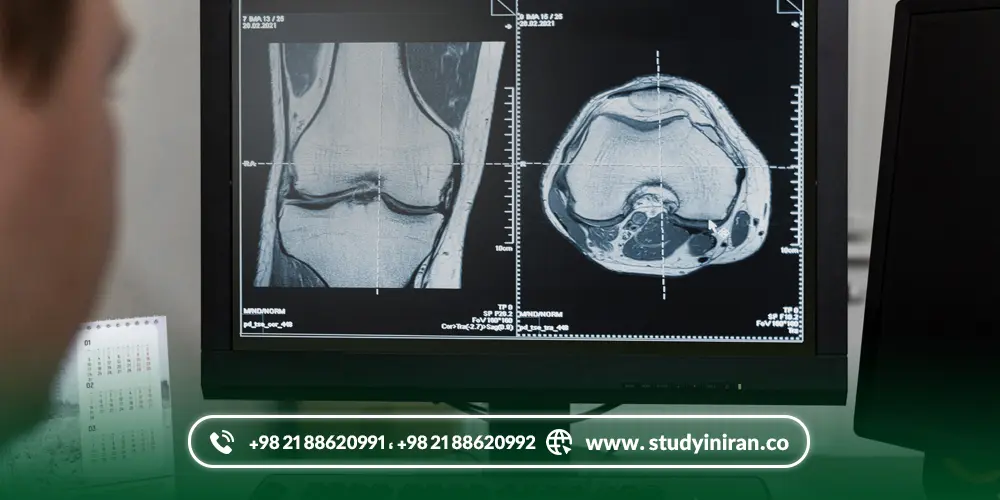
Sonography, also known as Sonology, is a specialized branch of medical imaging that focuses on the study, interpretation, and analysis of ultrasound images. It blends the science of acoustic physics with modern imaging technology and clinical knowledge, aiming to improve diagnostic precision through detailed ultrasound data analysis. Sonologists — the experts in this field — play a vital role in patient care by assisting physicians in clinical decision-making through accurate image interpretation, ultimately contributing to higher-quality medical outcomes.
With the growing demand for more accurate diagnoses and rapid advancements in imaging technology, the need for skilled sonologists continues to rise. Studying this field allows physicians to gain a deeper understanding of sound wave physics, imaging techniques, and the clinical applications of ultrasound, enhancing their ability to interpret images and assess internal conditions with confidence and accuracy.
Training in sonology typically combines theoretical coursework, hands-on workshops, and clinical practice, preparing physicians to operate advanced imaging equipment effectively. These programs are particularly well-suited for medical graduates (MBBS holders) seeking to specialize in diagnostic imaging.
In addition to traditional in-person instruction, many institutions now offer flexible online learning options, enabling working professionals to study without disrupting their schedules. These online programs feature interactive learning materials and expert-led sessions, allowing participants to access cutting-edge sonology education from anywhere — and to develop the skills needed for faster, more precise medical diagnoses.
Sonography Courses in Iran
Studying in Iran offers an excellent opportunity for physicians who wish to enhance their skills in ultrasound technology and its clinical applications. One of the most popular educational paths in this field is the Diploma in Sonology, which emphasizes hands-on training, operation of advanced imaging equipment, and real-world clinical practice — effectively preparing doctors for the professional challenges of diagnostic imaging.
For those seeking advanced expertise and leadership roles, the Postgraduate (PG) Diploma in Sonology provides in-depth instruction aimed at expanding medical imaging knowledge and developing specialized competencies. These programs focus on refining diagnostic accuracy and fostering a deeper understanding of ultrasound’s role in modern healthcare.
Additionally, the Certificate Course in Sonology serves as an ideal entry point for newcomers to the field. This foundational program introduces participants to the core principles of ultrasound technology, helping them build a strong base for further specialization and advanced study.
Throughout sonography courses in Iran, trainees gain practical experience with various ultrasound techniques and learn to operate state-of-the-art imaging systems. The curriculum places strong emphasis on clinical exposure and hands-on learning, allowing participants to interpret and analyze sonographic findings accurately in real diagnostic settings.
A defining feature of these programs is their practical, experience-driven approach. Students spend a significant portion of their training working directly with real imaging equipment and performing clinical exercises. This immersive learning environment not only sharpens diagnostic precision but also instills the confidence required to handle complex professional challenges in the field of medical imaging.
Admission Requirements for Sonology Programs in Iran

Bachelor’s Degree in Sonography
To enroll in a Bachelor’s program in Sonography and obtain a student visa for Iran, applicants must hold a high school diploma or its equivalent, with strong academic performance in core science subjects such as biology, chemistry, physics, and mathematics. A solid academic record is generally required, and each institution may set its own minimum GPA. Proficiency in either English or Persian is essential, depending on the language of instruction. Some universities may also conduct entrance exams or interviews as part of the admission process.
Master’s Degree in Sonography
For admission to a Master’s program in Sonography, candidates must possess a relevant Bachelor’s degree in medicine, nursing, public health, or the basic sciences. A good undergraduate GPA is mandatory, and language proficiency in English or Persian is required, depending on the course language. Some programs may also ask for relevant work experience in the healthcare field or require a research proposal, particularly for research-oriented tracks.
Doctorate (PhD) in Sonography
Admission to a PhD program in Sonography requires a relevant Master’s degree and a strong research background in medical imaging or a related field. Applicants must demonstrate proficiency in English or Persian, depending on the language of instruction. The application process typically includes submitting a detailed research proposal, letters of recommendation from academic or professional referees, and, in some cases, an entrance exam or interview. Doctoral programs are designed to prepare students for advanced diagnostic roles and academic or clinical research in the field of ultrasound imaging.
Online Sonography Courses in Iran
For physicians and healthcare professionals seeking to advance their knowledge and skills in sonography, online training programs in Iran offer a flexible and accessible way to learn at an advanced level. These programs include both short-term certificate courses and long-term diploma programs, covering everything from the fundamentals of ultrasound imaging to complex diagnostic techniques.
Online courses are particularly well-suited for professionals with busy schedules or those who prefer to study at their own pace. Participants gain access to high-quality educational materials and virtual classrooms, allowing them to learn the principles of ultrasound and advanced diagnostic methods from the comfort of their home or workplace.
These programs are especially beneficial for doctors aiming to specialize in areas such as obstetric and gynecologic sonography, abdominal imaging, and advanced medical diagnostics. The curriculum emphasizes practical, hands-on learning alongside theoretical knowledge, ensuring that participants can integrate what they learn into real-world clinical practice with accuracy and confidence.
Six-month sonography programs are designed to provide comprehensive training in core concepts and practical techniques, while three-month intensive courses focus on developing essential diagnostic skills more rapidly. All courses are structured in line with medical education standards and accredited by relevant authorities, ensuring that the qualifications earned hold professional value and contribute meaningfully to participants’ career growth.
Top Universities for Sonography in Iran

Iran is home to several prestigious universities that offer programs in sonography and medical imaging, equipping students with the expertise needed for professional practice in the field of sonology. These institutions combine advanced technology, modern medical facilities, and the guidance of highly qualified faculty to provide a comprehensive educational experience.
Since both sonography and medical imaging are among the most competitive and in-demand medical disciplines, tuition fees for international students can be relatively high. To help offset costs, applicants are encouraged to explore Iran scholarship opportunities, with full details available through the official Study in Iran platform.
Below are some of the leading Iranian universities offering sonography and medical imaging programs, along with their Asian and global rankings:
Tehran University of Medical Sciences (Tehran)
- Rank: 48 in Asia, 218 globally
- Acceptance rate: 10%
- Established: 1934
Shahid Beheshti University of Medical Sciences (Tehran)
- Rank: 80 in Asia, 331 globally
- Established: 1960
Shiraz University of Medical Sciences (Shiraz)
- Rank: 122 in Asia, 444 globally
- Acceptance rate: 10%
- Established: 1946
Isfahan University of Medical Sciences (Isfahan)
- Rank: 126 in Asia, 454 globally
- Established: 1946
University of Tehran (Tehran)
- Rank: 153 in Asia, 499 globally
- Acceptance rate: 12%
- Established: 1934
Tarbiat Modares University (Tehran)
- Rank: 156 in Asia, 506 globally
- Acceptance rate: 12%
- Established: 1982
Tabriz University of Medical Sciences (Tabriz)
- Rank: 179 in Asia, 573 globally
- Established: 1947
Mashhad University of Medical Sciences (Mashhad)
- Rank: 189 in Asia, 587 globally
- Established: 1949
Amirkabir University of Technology (Tehran)
- Rank: 278 in Asia, 787 globally
- Established: 1958

Iran University of Science and Technology (Tehran)
- Rank: 287 in Asia, 810 globally
- Acceptance rate: 12%
- Established: 1929
University of Urmia (Urmia)
- Rank: 296 in Asia, 827 globally
- Established: 1965
Shiraz University (Shiraz)
- Rank: 297 in Asia, 828 globally
- Established: 1946
Sharif University of Technology (Tehran)
- Rank: 299 in Asia, 832 globally
- Established: 1965
Ahvaz Jundishapur University of Medical Sciences (Ahvaz)
- Rank: 316 in Asia, 872 globally
- Established: 1956
Gilan University of Medical Sciences (Rasht)
- Rank: 345 in Asia, 934 globally
- Established: 1985
Islamic Azad University, Tabriz Branch (Tabriz)
- Rank: 361 in Asia, 967 globally
- Established: 1982
Kermanshah University of Medical Sciences (Kermanshah)
- Rank: 367 in Asia, 977 globally
- Established: 1965
These universities combine theoretical instruction with practical, hands-on sonography training to prepare students for accurate and professional medical diagnostics in clinical settings. Graduates receive nationally and internationally recognized degrees, positioning them for successful careers in the rapidly evolving field of medical imaging.
Conclusion
Pursuing a degree in Sonography in Iran offers physicians and healthcare professionals an excellent opportunity to enhance their expertise in medical imaging and clinical diagnostics. With the right educational path—from foundational courses to advanced programs—students can acquire both the theoretical understanding and the hands-on experience required for success in this growing field.
For those seeking high-quality education and reliable academic guidance, Study in Iran serves as a trusted partner, providing comprehensive information and professional support throughout every stage of the academic journey, making it easier to achieve professional goals in sonography.
Frequently Asked Questions
Sonology is a specialized branch of medical science focused on the interpretation and analysis of ultrasound images, while sonography refers to the actual process of capturing those images. Sonologists play a key role in clinical decision-making by examining and interpreting ultrasound results.
Graduates of medicine, nursing, public health, or basic sciences who are interested in medical imaging and ultrasound diagnostics can pursue bachelor’s, master’s, or doctoral programs in sonology.
Undergraduate programs require a high school diploma with a focus on science subjects and proficiency in English or Persian. Master’s and PhD programs typically require a relevant degree, strong academic performance, research experience, and, in some cases, a research proposal.
Program lengths vary from short-term certificate courses lasting a few months to long-term diploma and advanced degree programs spanning several years. Both online and on-campus options are available.
Yes. Online courses are designed with interactive learning modules and taught by experienced instructors, ensuring the same level of academic quality while allowing participants to study from home or work.
Programs cover various areas such as obstetric and gynecologic sonography, abdominal imaging, general ultrasound, and advanced diagnostic imaging. Students gain both theoretical knowledge and practical clinical training.
Yes. Sonography programs in Iran comply with national and international medical education standards and are accredited by medical councils, making their certificates valid and credible.
Graduates can work in hospitals, specialized clinics, diagnostic imaging centers, research institutes, or even establish their own practice. They play a crucial role in the early detection and diagnosis of medical conditions.




0 Reply To “Study Sonography (Ultrasound) in Iran”