


- Bachelor of Science in Nursing in Iran
- Key Functions of a Bachelor’s Degree Nurse in Iran
- Rate of Acceptance for Nursing Programs in Iran
- Benefits of Studying Nursing in Iran
- Nursing Programs in Iran for International Students
- Top Nursing University in Iran
- Admission Requirements for Nursing Programs in Iran
- Cost of Studying Nursing in Iran
- Nursing Scholarships in Iran for International Students
- Career Opportunities for Nursing Graduates in Iran
- Final Thoughts
- Frequently Asked Questions
Nursing in Iran is an independent and vital discipline within the medical sciences, playing a key role in the country’s healthcare system. Undergraduate nursing students receive high-quality training designed to develop competent, knowledgeable, and responsible nurses. The goal of the bachelor’s program is to prepare nurses capable of delivering clinical and health services—such as assessment, care, education, counseling, prevention, management, and rehabilitation—with quality and in line with modern standards.
The nursing curriculum is structured to equip graduates to meet the evolving needs of society while keeping pace with global and regional developments. The program aims to promote public health, improve patients’ quality of life, and provide cost-effective, humane care. For these reasons, nursing attracts many students seeking education in Iran.
Bachelor of Science in Nursing in Iran
The Bachelor of Science in Nursing (BScN) in Iran is a four-year university program combining theoretical coursework and practical training. It covers subjects such as anatomy, physiology, mental health, nursing principles, pediatric nursing, pharmacology, critical care, and community health. The program aims to train professional nurses capable of providing comprehensive care, assessment, education, and support to patients across various clinical settings.
Key Functions of a Bachelor’s Degree Nurse in Iran
Graduates with a Bachelor of Science in Nursing in Iran, after obtaining their professional license, can work in hospitals, healthcare centers, nursing homes, and public health facilities. Their main duties include:
- Managing patient care pre- and post-surgery
- Monitoring vital signs such as temperature, blood pressure, pulse, and respiration
- Collecting blood and urine samples for lab tests
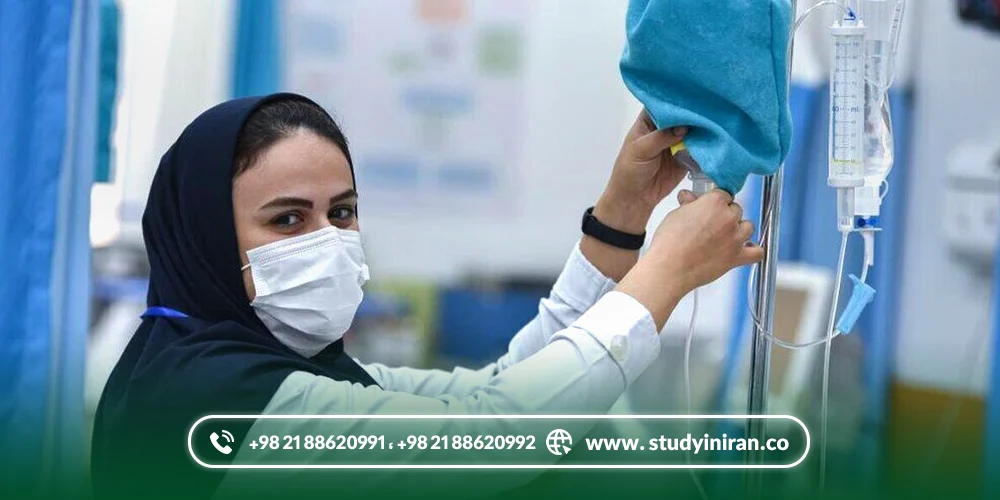
- Administering intramuscular, subcutaneous, and intravenous injections
- Supervising medication intake and adjusting treatment plans
- Providing emotional support to patients and their families
- Documenting nursing care accurately in medical records
Rate of Acceptance for Nursing Programs in Iran
- 77 universities offer Bachelor of Science in Nursing programs.
- There are 78 active undergraduate nursing programs nationwide.
- Additionally, 68 master’s and 23 doctoral nursing programs are running in various universities.
This data reflects the expanding nursing education sector, but specific acceptance rates vary by university and program.
Benefits of Studying Nursing in Iran
High-Quality Education and Research: Iran’s medical universities offer advanced educational programs and diverse research opportunities. Experienced faculty, teaching hospitals, and modern equipment create a professional and scientific environment for students.
Affordable Tuition: Tuition fees in Iran, especially at public universities, are significantly lower than in Europe, the US, or Canada, making Iran an economical choice for those pursuing medical and health-related studies.
Cultural Experience: Studying in Iran provides a unique chance to immerse in one of the world’s oldest civilizations, gaining valuable personal and professional cultural insights.
Growing Healthcare Infrastructure: With significant growth in Iran’s healthcare sector, students have increased access to practical and clinical training during their studies, easing job placement after graduation.
Opportunities for Further Studies: After earning a bachelor’s degree in health sciences or nursing, graduates can continue their education in Iran at master’s and doctoral levels.
International Recognition: Iranian medical and health graduates are recognized in many countries like Canada, Germany, Australia, and regional nations, provided they meet the professional licensing requirements of those countries.
Nursing Programs in Iran for International Students
| University | Program | Duration | Language of Instruction | Key Features |
| Shahid Beheshti University of Medical Sciences | Bachelor of Science in Nursing (BSN) | 4 years | English | Strong focus on clinical practice and patient care |
| Shiraz University of Medical Sciences | Master of Science in Nursing (MSN) | 2 years | English | Specializations in midwifery, psychiatric nursing, and advanced care |
Top Nursing University in Iran
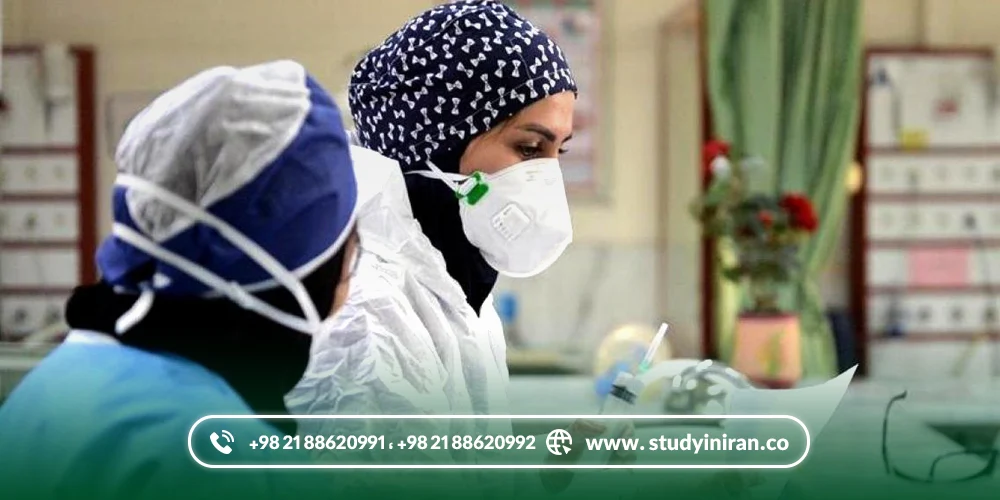
Nursing is one of the most in-demand medical fields in Iran, and several top-ranked universities offer competitive programs for both local and international students. Here’s a look at some of the best nursing universities in the country:
1. Tehran University of Medical Sciences (TUMS)
- National Subject Rank: 262
- National University Rank: 630
- Global Ranking: Top 3% worldwide
- Highlights: Iran’s oldest and most prestigious medical school, offering state-of-the-art facilities, a wide range of teaching hospitals, and strong international programs.
2. Iran University of Medical Sciences
- National Subject Rank: 404
- National University Rank: 1089
- Global Ranking: Top 6% worldwide
- Highlights: Known for innovation in nursing technologies and strong research infrastructure.
3. Shahid Beheshti University of Medical Sciences
- National Subject Rank: 410
- National University Rank: 1087
- Global Ranking: Top 6% worldwide
- Highlights: Offers interdisciplinary medical programs and is actively involved in regional and international research collaborations.
4. Mazandaran University of Medical Sciences
- National Subject Rank: 433
- National University Rank: 613
- Global Ranking: Top 3% worldwide
- Highlights: Strong emphasis on community health services and unique opportunities for clinical training in diverse healthcare settings.
5. Mashhad University of Medical Sciences
- National Subject Rank: 435
- National University Rank: 886
- Global Ranking: Top 5% worldwide
- Highlights: Home to one of the largest teaching hospitals in eastern Iran with a wide range of specialized nursing programs.
These universities provide advanced academic and clinical environments, making them excellent choices for students pursuing a nursing career in Iran.
Admission Requirements for Nursing Programs in Iran
To study nursing in Iran, international applicants need to meet a set of academic, language, and program-specific requirements that vary by degree level and university. Here’s a breakdown:
- Academic Background: Completion of secondary education or its equivalent, preferably with a strong emphasis on science subjects (biology, chemistry, physics, and mathematics).
- Minimum GPA: A strong high school GPA is generally required; exact thresholds depend on the university.
- Language Proficiency: Proficiency in either English or Persian, depending on the language of instruction. Applicants may need to submit IELTS or TOEFL scores.
- Entrance Exam: Some universities require applicants to take an entrance exam or attend an interview.
- For Master’s Programs (e.g., MSN, MPH, M.Sc.): A bachelor’s degree in a relevant field (nursing, public health, medicine, pharmacy, etc.) from a recognized institution.
- For PhD Programs: A relevant master’s degree and, in some cases, professional experience in a healthcare setting. A research proposal is usually required for research-based programs.
- For Postdoctoral Studies: A doctoral degree (e.g., PhD in Nursing or Epidemiology) and a proven research background, including published academic work.
- Letters of Recommendation: Academic or professional references are often required.
- Interviews: Some programs may invite applicants for interviews to assess academic readiness or research potential.
Requirements can vary depending on the university, program structure, and language of instruction. It’s essential to check each university’s specific guidelines before applying.
Cost of Studying Nursing in Iran
Studying nursing in Iran is considered a budget-friendly option for international students—especially when compared to many Western countries. Tuition and living expenses can vary depending on the type of institution and services offered.
Tuition Fees:
- Public Universities: Annual tuition for nursing programs generally ranges from $2,000 to $6,500 USD.
- Private Universities: Fees can go up to $10,000 USD per year.
- For example, Tehran University of Medical Sciences (TUMS) charges around $4,000 USD in the first year, increasing to about $6,500 USD in subsequent years.
Living Costs:
- Average monthly living expenses in Iran are between $500 and $900 USD, covering accommodation, food, transportation, and daily needs.
- Student dormitories cost roughly $100 to $300 USD/month, while private housing can range from $200 to $500 USD/month.
- Public transportation is highly affordable, averaging about $2 per trip.
Additional Expenses:
- Language courses (English or Persian, if required): $400 to $475 USD.
- Health insurance and annual medical screening: $30 to $50 USD.
- Application and registration are often free, but minor fees may apply for visa processing or airport pickup services.
Overall, Iran offers a cost-effective pathway for students interested in nursing, with affordable education and manageable living expenses.
Nursing Scholarships in Iran for International Students
If you’re looking to make nursing education in Iran more affordable, a range of scholarships are available to help reduce your costs. Below are some of the main scholarship options for international nursing students:
| Scholarship Name | Eligibility Criteria | Coverage | Degree Level | Host Institution |
| Ministry of Health Financial Aid | International students with strong academic records | Tuition, living expenses, health insurance | Bachelor’s, Master’s, PhD | Various medical universities in Iran |
| Imam Khomeini Scholarship | Students from OIC member countries with excellent academic standing | Full tuition, housing, stipend | Bachelor’s, Master’s, PhD | University of Tehran |
| Alavi Foundation Scholarships | Muslim international students studying in Iran | Partial to full tuition, living costs | Bachelor’s, Master’s, PhD | Various medical universities |
| Sharif International Awards | High-performing international students in nursing or medical fields | Tuition waiver, accommodation | Master’s, PhD | Sharif University of Technology |
| Iran Government Scholarships | Students from developing countries with financial need | Full tuition, housing, health insurance | Bachelor’s, Master’s, PhD | Various medical universities |
Scholarship availability and coverage can vary depending on your country of origin, academic level, and yearly quotas. For the most accurate and updated information, it’s recommended to check the official websites of universities or the Ministry of Science, Research and Technology.

Career Opportunities for Nursing Graduates in Iran
After completing your nursing degree in Iran, a wide range of career opportunities becomes available—many of which offer a stable income and the potential to convert your student visa into a work visa. Here’s an overview of common job paths for nursing graduates:
| Career Path | Typical Roles | Average Salary (USD/year) | Employment Sectors | Notes |
| Registered Nurse | Staff Nurse, Head Nurse, Nursing Educator | $3,600 – $10,800 | Hospitals, Clinics, Universities | Strong demand in specialized areas like ICU, Pediatrics, and Oncology |
| Public Health Specialist | Epidemiologist, Health Consultant, Community Health Educator | $4,800 – $12,000 | Ministry of Health, NGOs, International Orgs | Involves research, policy-making, and community health initiatives |
| Healthcare Manager | Hospital Administrator, Health Unit Supervisor | $6,600 – $17,400 | Public and Private Healthcare Institutions | High demand for skilled managers; offers long-term career advancement |
Salaries in Iran are typically paid in the local currency (Iranian Rial), but figures above are approximate conversions to USD to help international students understand earning potential. Keep in mind that actual income may vary depending on experience, location, and employer.
Final Thoughts
Studying nursing in Iran offers a solid blend of academic knowledge and hands-on clinical training within one of the region’s most established healthcare systems. Iranian medical universities, equipped with experienced faculty, modern facilities, and direct access to specialized hospitals, provide a strong foundation for both academic and professional development.
For international students interested in pursuing nursing in Iran, Study in Iran serves as the official and reliable gateway. It offers comprehensive information about universities, admission requirements, and scholarship opportunities, guiding you through every step, from application to enrollment.
Frequently Asked Questions
The Bachelor’s in Nursing typically takes 4 years, combining theoretical coursework, clinical training, and practical rotations.
Yes. Iranian medical universities accept international students, and several programs are offered in English.
Applicants must have a high school diploma or equivalent, preferably with a science background (biology, chemistry). Language proficiency (Persian or English) is required, and some universities may also require an entrance exam or interview.
Yes. Due to an expanding healthcare system and population growth, there is a strong demand for qualified nurses in hospitals, clinics, and public health centers.
For international students, tuition ranges from $1,000 to $4,000 USD per year, depending on the university. Public universities often offer lower or even free tuition for local students.
Graduates can work as registered nurses in hospitals, clinics, rehabilitation centers, and public health institutions. Many also pursue higher education such as Master’s or PhD programs.
Yes. Various scholarships are offered by Iranian universities and governmental organizations like the Ministry of Health, based on academic merit or financial need.
Most programs are taught in Persian, but some universities offer English-taught programs for international students.
Yes, but degree recognition varies by country. Graduates often need to complete equivalency procedures or pass licensing exams to practice abroad.
Specializations include Critical Care Nursing, Psychiatric Nursing, Pediatric Nursing, Surgical Nursing, Community Health Nursing, and Nursing Education.


0 Reply To “Studying Nursing in Iran”