


- Why Study Fashion Design in Iran
- Undergraduate Majors in Fashion Design in Iran
- Undergraduate Admission Periods for Fashion Design in Iran
- Top Fashion Design Universities in Iran
- Undergraduate Tuition for Fashion Design in Iran
- Requirements for Undergraduate Fashion Design Studies in Iran
- Academic Qualifications and Required Scores
- Scholarships for Undergraduate Fashion Design Programs in Iran
- Careers and Graduates of Fashion Design Programs in Iran
- Conclusion
- Frequently Asked Questions
Study fashion design in Iran offers a dynamic and comprehensive experience that blends technical skills, individual creative expression, and goal-oriented approaches. The program emphasizes sustainability, fashion management, and the integration of traditional handicrafts with modern technologies, preparing students for success in the fashion industry and enabling them to drive positive change through innovative design.
Students benefit from a wide international network within the fashion industry and leverage fifty years of business education experience, guided by faculty actively engaged in the global fashion scene. The program also provides opportunities to develop a personal creative process while acquiring the knowledge, skills, and professional connections necessary to make a meaningful impact in the fashion world.
Why Study Fashion Design in Iran

- Cultural diversity in design
Iran’s rich history and cultural heritage provide unparalleled inspiration for fashion design students. Studying in Iran offers the chance to explore a blend of traditional and contemporary design elements.
- Quality education
Iranian universities offer undergraduate fashion design programs with high standards, focusing on developing both creative and technical skills through a combination of theoretical learning and hands-on experience.
- Expert faculty
Experienced faculty with knowledge across various fashion design fields guide and mentor students, enhancing their skills and professional expertise.
- Affordability
The cost of study and living in Iran is lower than in many Western countries, making it an economical option for international students.
- Creative opportunities
Fashion programs in Iran encourage students to express their creativity and produce innovative projects and practical design solutions.
- Networking and collaboration
Studying in Iran allows interaction with peers, professors, and industry professionals, with opportunities to participate in workshops, competitions, and design events.
- Industry access
Iran’s growing fashion industry provides diverse career opportunities for graduates, including roles in advertising, fashion, architecture, and related sectors.
- Cultural exchange
International students can experience Iran’s culture, language, and lifestyle, broadening their global perspectives.
- Preparation for graduate studies
Graduates from Iranian fashion design programs gain a solid foundation for pursuing master’s degrees in design or related fields.
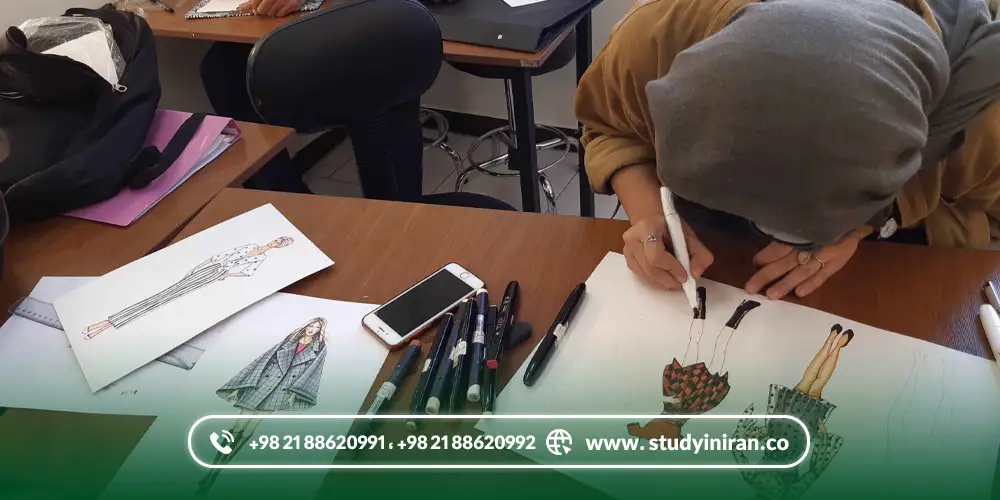
Undergraduate Majors in Fashion Design in Iran
| University | Duration (Years) | Approx. Tuition (IRR/Year) | Specializations / Courses Offered |
| University of Tehran | 4–5 | 10,000,000 – 50,000,000 | Graphic Design, Industrial Design, Fashion Design |
| Iran University of Science and Technology | 4–5 | 10,000,000 – 40,000,000 | Industrial Design, Visual Communication Design, Fashion Design |
| University of Art | 4–5 | 10,000,000 – 30,000,000 | Industrial Design, Visual Communication Design, Textile Design |
| Isfahan University of Art | 4–5 | 10,000,000 – 30,000,000 | Industrial Design, Graphic Design, Textile Design |
| Shiraz University of Art | 4–5 | 10,000,000 – 40,000,000 | Industrial Design, Visual Arts, Ceramic and Glass Design |
Undergraduate Admission Periods for Fashion Design in Iran
- Fall Admission: Typically begins in September or October. Most universities offer a wide range of undergraduate programs, including Fashion Design, during this semester.
- Spring Admission: Some universities provide a limited selection of undergraduate programs, including Fashion Design, starting in February or March.
Top Fashion Design Universities in Iran
- University of Tehran: Graphic Design, Industrial Design, Fashion Design
- Iran University of Science and Technology (IUST): Industrial Design, Visual Communication Design, Fashion Design
- University of Art: Industrial Design, Visual Communication Design, Textile Design
- Art University of Isfahan: Industrial Design, Graphic Design, Textile Design
- University of Art, Shiraz: Industrial Design, Visual Arts, Ceramic and Glass Design
- Alzahra University: Graphic Design, Visual Communication Design, Textile Design
- Art University of Isfahan (again listed): Industrial Design, Visual Communication Design, Illustration
- Science and Culture University: Graphic Design, Industrial Design, Textile Design
- Kurdistan University: Industrial Design, Product Design, Furniture Design
- Sura University: Graphic Design, Fashion Design, Visual Arts
Undergraduate Tuition for Fashion Design in Iran
Tuition for international students is significantly higher than for local students and varies depending on the university, program, and facilities offered, starting from around $3,000 per academic year. This fee typically covers core instruction, access to workshops, libraries, and student facilities. However, living expenses, dormitories, and student insurance are generally not included. Prospective students can apply for Iranian scholarships to reduce costs substantially.
Requirements for Undergraduate Fashion Design Studies in Iran

To gain admission to a fashion design program and obtain a student visa for Iran, applicants must meet specific academic and administrative requirements:
Educational Documents:
Applicants must have completed secondary education or hold a high school diploma with a relevant academic background. A full diploma or equivalent is generally required.
Academic Foundation:
Strong foundations in subjects related to design—such as art, painting, mathematics, and physics—are recommended. Previous experience in art, design, or related fields is an advantage, reflecting creativity and artistic inclination.
Language Proficiency:
Iranian students must be proficient in the language of instruction (Persian). International students must demonstrate proficiency in either English or Persian, depending on the program. Language certificates such as IELTS or TOEFL may be required.
Entrance Exam or Portfolio Review:
Some universities conduct entrance exams or review applicants’ portfolios, assessing creativity, design skills, and artistic talent. Portfolios showcase projects and artworks.
Statement of Purpose:
Applicants may need to submit a motivation letter explaining their interest in fashion design, academic and career goals, and expectations from the program.
Recommendation Letters:
Some universities require one or more letters of recommendation from teachers, professors, or professionals, confirming artistic ability, creativity, and potential in design.
Prerequisites (if applicable):
Certain universities may require completion of specific courses in high school relevant to fashion design.
Age Limit (if applicable):
Some programs set an age limit, often around 23 years.
Academic Qualifications and Required Scores
- UCAS: Minimum 96 points at A2 level
- BTEC Extended Diploma: MMM
- BTEC Diploma: DD
- Pass Access Course: Minimum 96 UCAS points
- International Baccalaureate (IB): Pass with at least 96 points in Higher Level courses
- T Level: P (C+)
- IELTS: Minimum 6.0 overall with no component below 5.5
- GCSE: Five subjects with minimum grade C/4 including Mathematics and English, or equivalent
Additional Requirements:
Applicants must submit a portfolio. The university’s admissions office will provide guidance via email on how to submit the portfolio.
Scholarships for Undergraduate Fashion Design Programs in Iran
Government Scholarships
The Iranian government may offer scholarships based on academic merit, financial need, or other criteria. These scholarships are usually administered by relevant ministries or agencies and can include programs in design fields.
University Scholarships
Many Iranian universities have scholarship programs to support outstanding students. These awards can be merit-based or need-based and may cover part or all of the tuition for fashion design programs.
Private Institutions and Foundations
Certain private organizations and foundations in Iran provide scholarships for students in design and creative arts. Funding usually comes from philanthropists or companies interested in promoting education and creativity.
International Scholarships
Some Iranian universities offer scholarships specifically for international students in fashion design. These scholarships aim to attract talented students from abroad and may cover partial tuition or living expenses.
Bilateral or Cultural Exchange Scholarships
Iran has bilateral agreements or cultural exchange programs with some countries, providing scholarships for study in Iran and promoting cultural exchange and academic cooperation.
Design Associations and Professional Organizations
Professional design associations in Iran may offer scholarships to talented and committed students in the field of design.
Research Grants and Design Competitions
Certain organizations and companies host research grants or design competitions, offering financial support and special recognition for fashion design students with innovative projects.
Careers and Graduates of Fashion Design Programs in Iran
- Industrial/Product Designer: Graduates can work in manufacturing companies, product design firms, or run their own businesses.
- Fashion Designer: Graduates can enter the fashion industry, designing clothing and accessories.
- Visual Merchandiser: Responsible for creating appealing product displays in retail environments. Salaries vary depending on experience and type of store.
- Multimedia Artist/Animator: Graduates skilled in multimedia and animation can work in the animation industry, video production companies, or advertising agencies. Compensation depends on project complexity and scale.
- Photographer: Graduates specializing in photography can work professionally in fashion, advertising, or photojournalism. Income varies based on project type and clients.
Conclusion
Study fashion design in Iran offers a unique opportunity to combine creativity, rich culture, and practical skills. This path allows students to develop both artistic and technical abilities while preparing them for careers in the fashion and design industry, domestically or internationally. Students benefit from reputable educational resources, experienced faculty, and extensive networking opportunities, building a successful future in fashion design. For detailed guidance on studying fashion design in Iran, Study in Iran provides support and answers to all related questions.
Frequently Asked Questions
A bachelor’s degree in fashion design typically lasts 4 to 5 years, depending on the university, and may include internships and practical projects.
Besides fashion design, students may explore related fields such as textile design, fashion styling, graphic design for fashion, and visual arts.
Yes, submitting a portfolio of artwork and design projects is essential to demonstrate skills and creativity. This includes fashion sketches, fabric designs, and related projects.
Iranian students usually need proficiency in Persian. International students may need proficiency in Persian or English depending on the university, and exams like IELTS or TOEFL may be required.
Generally, high school graduates or those with a relevant diploma interested in art and design can apply. Some universities may have an age limit, typically around 23 years.
Graduates can work as fashion designers, textile designers, stylists, fashion-related graphic designers, industrial fashion designers, or entrepreneurs in the fashion industry.
Yes, some universities, foundations, and private or governmental organizations offer scholarships based on talent, financial need, or cultural exchange initiatives.
Yes, graduates can continue to master’s programs or research in fashion design, textile design, fashion, or creative industries.
Most universities have online application forms. Admission offices provide full information about registration, required documents, and portfolio submission. Consulting with academic advisors and study consultants is also recommended.




0 Reply To “Study Fashion Design in Iran”