

- Expected Goals and Skills of Anesthesiology Graduates in Iran
- Duration of Studying Anesthesiology in Iran
- Admission Requirements for Anesthesiology in Iran
- Curriculum Structure of Anesthesiology Program in Iran
- Studying Anesthesiology Tuition Fees in Iran
- Top Anesthesiology Universities in Iran
- Final Thoughts
- Frequently Asked Questions
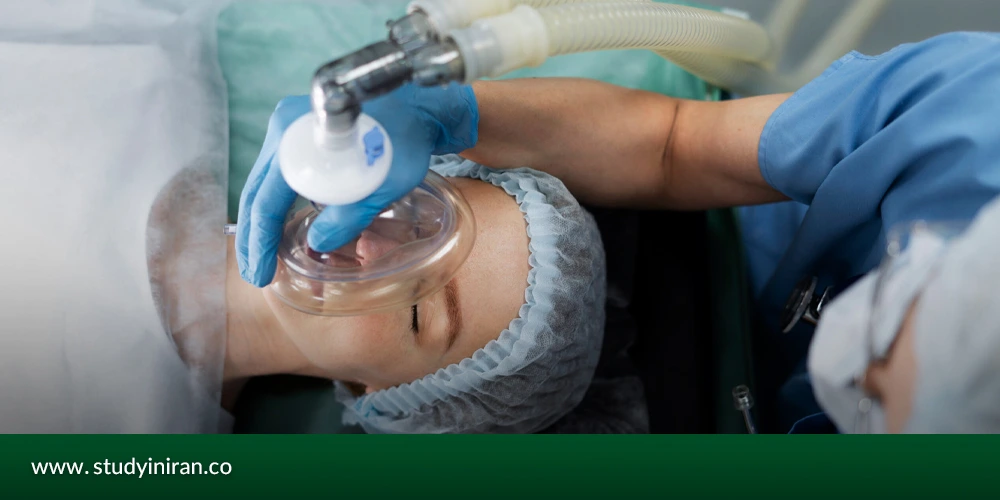
Studying Anesthesiology in Iran has become one of the most essential and practical fields in medicine, with specialists playing a vital role in patient safety and health. Anesthesia is a critical component of any medical procedure where patients undergo surgeries, treatments, or various examinations. Graduates in this field must have the skills to manage and control critical and emergency situations and prevent risks associated with anesthesia during surgeries.
In Iran, several reputable universities, such as Tehran University of Medical Sciences, Shiraz University of Medical Sciences, and Isfahan University of Medical Sciences, offer specialized anesthesia programs. These institutions provide up-to-date and comprehensive educational programs that prepare students for entering the workforce. Therefore, pursuing a degree in anesthesia not only offers the opportunity to work in a challenging and respected field but also enables graduates to play a crucial role in improving patient health and safety through their studies in Iran.
Expected Goals and Skills of Anesthesiology Graduates in Iran

Graduates of Anesthesiology programs in Iran are expected to acquire a set of general competencies and skills necessary to perform their duties effectively. These competencies include:
General Competencies
- Communication Skills: The ability to communicate effectively with patients, colleagues, and medical teams in various healthcare settings.
- Teaching: The ability to transfer knowledge to others, including educating medical staff and students.
- Research and Scientific Writing: Conducting scientific research and writing articles and reports in the field of anesthesiology and critical care.
- Critical Thinking and Problem-Solving: The ability to analyze and assess complex medical situations and make effective decisions in critical conditions.
- Professionalism: Adherence to ethical principles, professional commitment, and high medical standards in all aspects of work.
Practical Skills
Anesthesiology graduates must master the following practical skills:
- Arterial Line Insertion
- Central Venous Line (CV Line) Insertion
- Double Endotracheal Tube Placement via Fiberoptic Bronchoscope
- Fiberoptic Bronchoscopy
- Fiberoptic Endotracheal Intubation
- Spinal Anesthesia
- Epidural Block (Lumbar and Thoracic Areas)
- Caudal Block
- Upper and Lower Limb Block
- Bier’s Block
- Neonatal Endotracheal Intubation
- Adult Endotracheal Intubation Outside the Operating Room
- Laryngeal Mask Airway (LMA) Insertion and Management
- Pain Management Techniques
- Painless Childbirth
- Transesophageal Echocardiography (TEE)
- Total Parenteral Nutrition (TPN)
- Intra-Aortic Balloon Pump (IABP)
- Anesthesia Outside the Operating Room (e.g., MRI, CT, Radiotherapy, Angiography)
- Anesthesia for Electroconvulsive Therapy (ECT)
- Nasal Intubation
- Endotracheal Tube Change with or without Tube Exchanging Tools
- Non-invasive Positive Pressure Ventilation (NIV)
- Bronchoscopy and Bronchoalveolar Lavage
- Intra-abdominal Pressure Measurement in ICU
- Ultrasound Guidance for Pleural Catheter Insertion
- Lumbar Puncture (LP) and Cerebrospinal Fluid (CSF) Pressure Measurement
- Tracheostomy
- Continuous Renal Replacement Therapy (CRRT)
- Awake Intubation
- Ultrasound Use for Blocks and Vascular Access
Duration of Studying Anesthesiology in Iran
The academic program in Anesthesiology typically lasts a minimum of 4 years. This includes both theoretical and practical courses designed to prepare students for advanced care in anesthesia and critical care fields.
Admission Requirements for Anesthesiology in Iran

General Requirements
To apply for the Anesthesiology program and obtain a student visa for Iran, applicants must meet the following general criteria, which can be found in the details of the graduate admission conditions:
Specific Requirements
- Educational Qualification: Applicants must have a Medical Doctor (M.D.) degree or a Medical and Surgery (M.B.B.S.) degree from accredited universities, either in Iran or abroad.
- Educational Prerequisite: Applicants must have successfully completed their general medical education program.
- Language Proficiency: Proficiency in English or Persian is required as these are the languages of instruction.
Application Deadline
Tehran University of Medical Sciences has a rolling admission system, reviewing student applications throughout the year. However, the final deadline for the September intake is June 31.
Applicants must submit all necessary documents by the specified date for their application to be considered.
Curriculum Structure of Anesthesiology Program in Iran
| Section/Unit | Educational Content | Duration |
| Operating Room/Recovery | Reviewing and examining patient files, selecting the best anesthesia method, inducing anesthesia, monitoring vital signs, post-anesthesia care, recovery room monitoring, etc. | Daily |
| Internal Medicine | Examination and evaluation of cardiovascular and pulmonary diseases, interpretation of pulmonary function tests, ECG, introduction to echocardiography and angiography, managing complex diabetes cases, kidney failure management, dialysis, etc. | 2 months |
| ICU (Intensive Care Unit) | Working with ventilators, oxygen therapy, total parenteral nutrition (TPN), patient care and monitoring, consultations. | 6 months |
| Anesthesia Consultation Room | Examining and evaluating referred patients, ordering and interpreting paraclinical tests, providing consultations or responding to consultations from other colleagues. | At least once a week |
| Pain Clinic | Introducing methods for managing acute and chronic pain and performing relevant procedures. | 2 months |
| Labor Pain Control Services | Introducing pain control methods during labor. | 1 month |
| Anesthesia Outside the Operating Room | Examining and evaluating patients, sedation for other procedures outside the operating room. | 1-month rotation |
| Social Medicine or Other Research Centers | Completing a research project. | 1 month |
| Elective Unit | One of the above-mentioned sections. | 1 month |
This table provides an overview of the curriculum structure for the Anesthesiology program, showing how students gain practical skills in various medical and anesthesiology fields through hands-on training in hospitals and various departments.
Studying Anesthesiology Tuition Fees in Iran
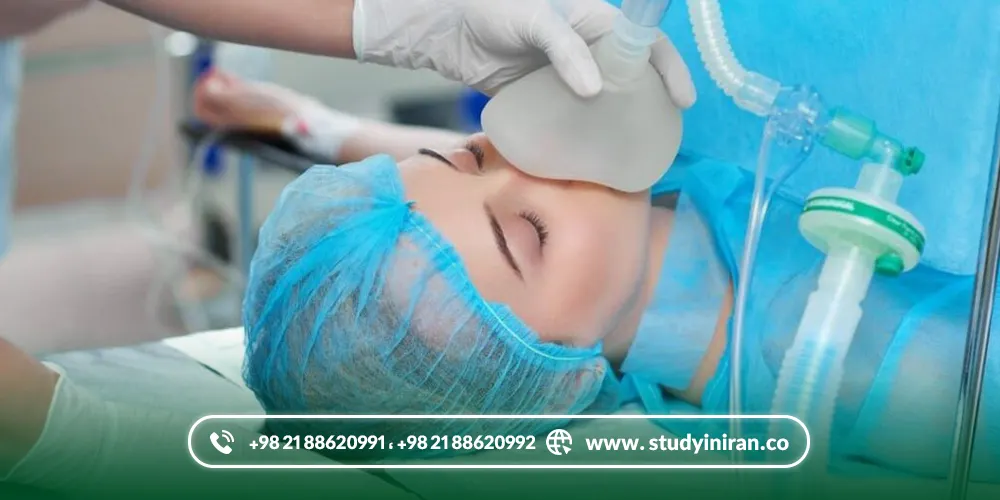
Studying Anesthesiology in Iran for international students comes with tuition fees that vary depending on the chosen university, level of study, and type of program. Generally, medical universities in Iran charge tuition fees in either US dollars or the equivalent amount in Iranian rials.
In general, the annual tuition fees for the specialty (residency) program in Anesthesiology for international students in Iran range as follows:
- Annual tuition fees: Around 2,500 to 6,000 USD
- For top universities such as Tehran University of Medical Sciences (TUMS) or Shahid Beheshti University of Medical Sciences, this amount may be between 4,000 to 6,000 USD per year.
- In universities with lower rankings, the tuition fees may range from 2,500 to 4,000 USD.
Additionally, you can reduce these costs by applying for scholarships. You can learn more about the eligibility and details of these scholarships by contacting the experts at Study In Iran for personalized guidance and assistance.
Top Anesthesiology Universities in Iran
Tehran University of Medical Sciences (TUMS)
- Location: Tehran
- Rank in Asia: 18
- Global Rank: 142
- Number of Students: 14,440
- Established: 1934
Description: TUMS is one of the most prestigious and oldest medical universities in Iran, ranking high globally. The university offers advanced programs in Anesthesiology, providing a great environment with modern scientific and practical infrastructure.
Shahid Beheshti University of Medical Sciences
- Location: Tehran
- Rank in Asia: 49
- Global Rank: 265
- Number of Students: 10,355
- Established: 1960
Description: Known for its advanced educational programs and research facilities in Anesthesiology, Shahid Beheshti University is a leading institution for aspiring anesthesiologists in Iran.
Isfahan University of Medical Sciences
- Location: Isfahan
- Rank in Asia: 57
- Global Rank: 297
- Established: 1946
Description: Isfahan University is one of the prominent educational and research institutions in Iran, offering comprehensive programs in Anesthesiology. Students gain valuable experience through both clinical and research opportunities.
Mashhad University of Medical Sciences
- Location: Mashhad
- Rank in Asia: 74
- Global Rank: 354
- Number of Students: 8,500
- Established: 1949
Description: This university is highly regarded in Iran and offers an outstanding reputation for its Anesthesiology programs, providing students with diverse educational and clinical training opportunities.
Shiraz University of Medical Sciences
- Location: Shiraz
- Rank in Asia: 88
- Global Rank: 386
- Number of Students: 9,905
- Established: 1946
Description: Shiraz University is recognized for its strong Anesthesiology programs and is especially noted for offering research and clinical training opportunities to students.
Tabriz University of Medical Sciences
- Location: Tabriz
- Rank in Asia: 94
- Global Rank: 396
- Established: 1947
Description: Tabriz University is known for its comprehensive Anesthesiology training, offering excellent clinical and educational facilities for students pursuing this field.
University of Tehran
- Location: Tehran
- Rank in Asia: 180
- Global Rank: 595
- Number of Students: 52,588
- Established: 1934
Description: As one of the most prominent universities in Iran, the University of Tehran offers a solid education in Anesthesiology, providing students with access to advanced research and clinical training.
Jundi Shapur University of Medical Sciences, Ahvaz
- Location: Ahvaz
- Rank in Asia: 193
- Global Rank: 624
- Established: 1956
Description: This university is known for its experienced faculty and clinical facilities, providing top-tier education and training in Anesthesiology.
Mazandaran University of Medical Sciences
- Location: Sari
- Rank in Asia: 206
- Global Rank: 666
- Number of Students: 9,273
- Established: 1988
Description: Mazandaran University is a leading center for Anesthesiology education, offering a specialized curriculum with a strong emphasis on both scientific learning and practical training.
Kerman University of Medical Sciences
- Location: Kerman
- Rank in Asia: 208
- Global Rank: 670
Description: Kerman University provides quality Anesthesiology programs and practical clinical experiences in a wide range of settings. The university is known for its commitment to education in the medical field.
These universities provide top-tier education, advanced facilities, and comprehensive clinical exposure, making them some of the best institutions to study Anesthesiology in Iran.
Final Thoughts
Studying Anesthesiology in Iran offers a valuable opportunity for international students who are looking to master advanced techniques and principles in this field at one of the most reputable universities in the world.
With comprehensive and high-quality educational programs, Iran allows students to acquire the necessary skills to work in anesthesiology, intensive care, and pain management in hospital and medical environments. Leading universities such as Tehran University of Medical Sciences, Shahid Beheshti University of Medical Sciences, and Mashhad University of Medical Sciences provide students with an unparalleled opportunity to study under renowned professors and in state-of-the-art hospitals.
The Study in Iran institute can provide thorough and accurate guidance for those who are seriously considering pursuing this field in Iran. By offering helpful information and supporting the application and admission process, this institute will assist you in starting your studies in Iran and making the most of the advanced educational and research facilities.
If you’re seeking a chance to study in one of the top educational institutions in the world for Anesthesiology, pursuing your education in Iran is an excellent choice.
Frequently Asked Questions
Yes, many reputable universities in Iran offer Anesthesiology programs in English for international students. These programs typically cover specialized courses in anesthesiology, intensive care, and pain management.
Applicants need to hold a medical degree (M.D.) or an equivalent degree from accredited universities, either from Iran or abroad. Additionally, proof of proficiency in either English or Persian is also required.
The Anesthesiology program in Iran typically lasts for a minimum of 4 years at the specialized (residency) level. This includes both theoretical training and practical experience in teaching hospitals, with rotations in the operating room, ICU, pain clinics, and other medical departments.
Yes, graduates can work in public and private hospitals, clinics, special care centers, and research or teaching facilities. They can also pursue careers in various fields such as intensive care, surgical anesthesia, pain management, and anesthesiology.
Yes, many Iranian medical universities offer fellowship programs in specialized areas such as cardiac anesthesiology, pediatric anesthesiology, neuroanesthesiology, and intensive care. Graduates can also apply for PhD programs in Anesthesiology and clinical sciences.
The program includes training in general and regional anesthesia techniques, crisis management in anesthesia, intensive care for post-surgical patients, pain management, and the use of advanced anesthesia equipment. These skills are gained through clinical training and practical experience in hospitals.
Yes, to enter the Anesthesiology residency program, applicants must typically take entrance exams administered by the Ministry of Health, Treatment, and Medical Education. These exams assess general medical knowledge, and based on the results, applicants are selected for residency programs.
Yes, many universities offer Anesthesiology programs in Persian. Therefore, proficiency in Persian is a crucial requirement for local students. However, for international students, some universities provide programs in English.
Tuition fees vary depending on the university and the specific program. Generally, tuition for domestic students at public universities in Iran is relatively affordable. For international students, tuition fees also vary by university and program.
Graduates of Anesthesiology can work in public and private hospitals, pain clinics, research and educational centers, private practices, and rehabilitation facilities. They can also pursue research roles and teaching positions at universities.




0 Reply To “Studying Anesthesiology in Iran”