

- Large Cities of Iran
- What Is a Metropolis?
- Tehran: Iran’s Largest and Most Populous City
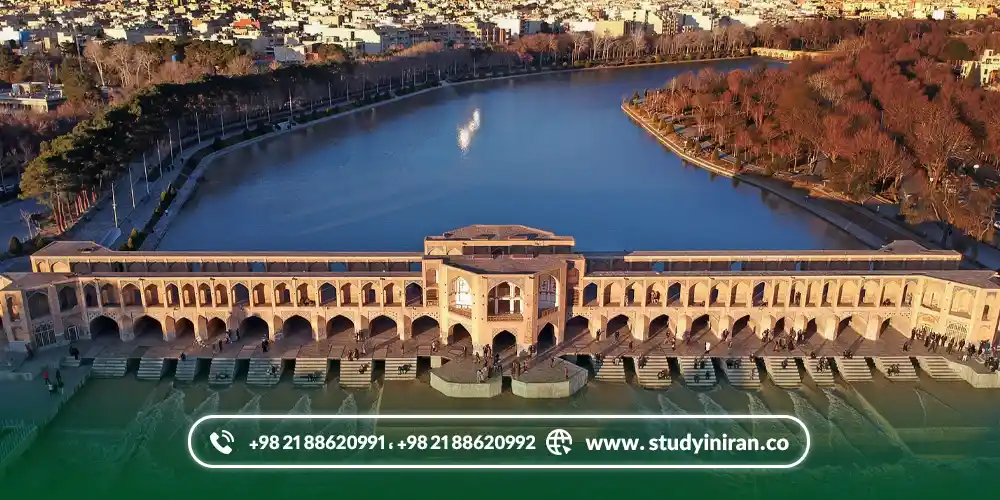
- Isfahan: Half of the World
- Mashhad
- Tabriz
- Shiraz, the City of Hafez and Saadi
- Karaj
- Qom
- Kermanshah
- Ahvaz
- Major Cities in Iran
- Most Beautiful Cities in Iran
- Coldest Cities in Iran
- Hottest Cities in Iran
- Popular Tourist Destination in Iran
- Final Thoughts
- Frequently Asked Questions
Iran has a population of over 78 million, making it the seventeenth most populous country in the world and the second largest in the Middle East, with a land area of 1,648,195 square kilometers. Its location near the Strait of Hormuz gives it significant strategic importance. Some cities stand out for their size, economic influence, and cultural significance, shaping daily life and opportunities across the country. Knowing major cities of Iran is useful for anyone planning to live, study, or travel in Iran.
Large Cities of Iran
The largest cities are measured by both population and area, which are often linked—larger cities tend to have more people. These are typically called “metropolises.” If you’re considering a student visa or planning to move to Iran, understanding the major cities will help you make better decisions about where to live or study.
What Is a Metropolis?
Internationally, a city with a population exceeding four million is considered a metropolis. Such cities usually cover a large area and offer extensive cultural and social facilities. In Iran, the largest cities by area are Tehran, Isfahan, Mashhad, Tabriz, and Shiraz, while the most populous are Tehran, Mashhad, Isfahan, Karaj, and Shiraz.
Tehran: Iran’s Largest and Most Populous City
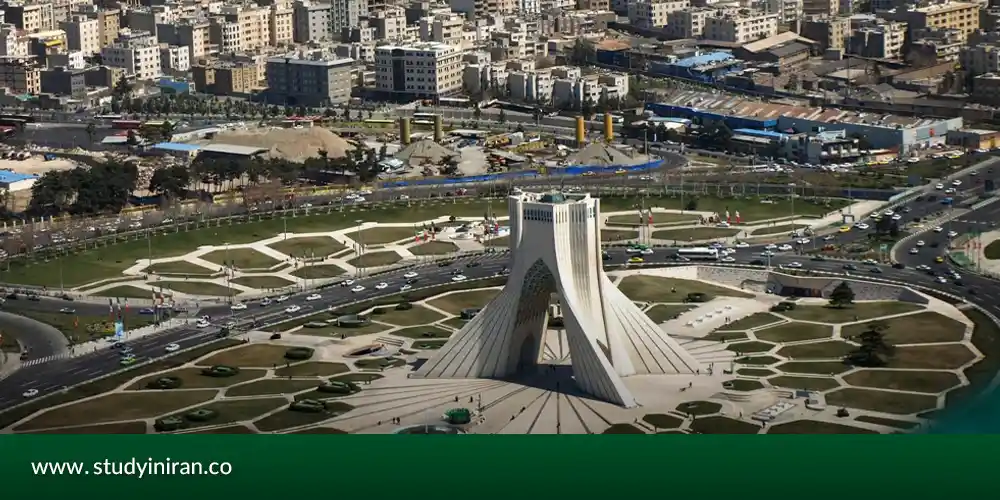
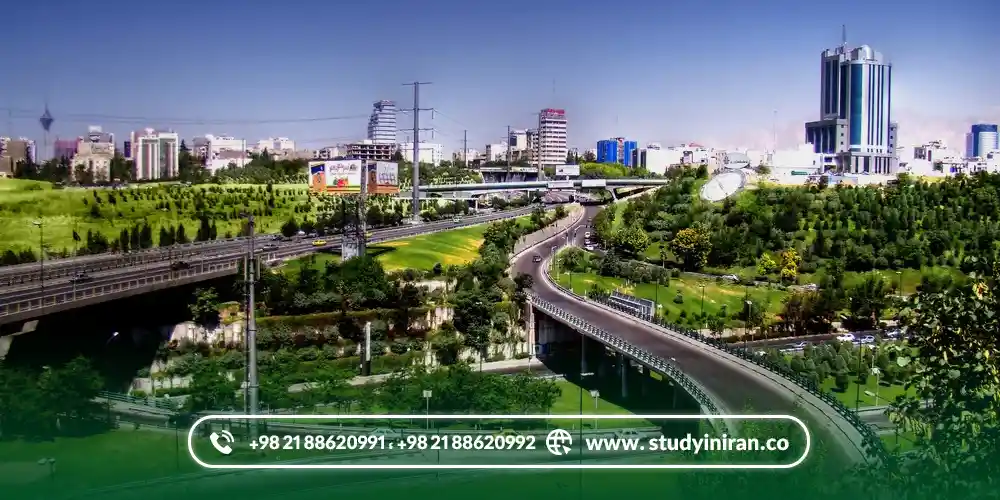
Tehran tops the list of Iran’s largest cities. Serving as the capital through the Qajar, Pahlavi, and Islamic Republic eras, Tehran spans nearly 790 square kilometers and is home to around 15 million people, making it the country’s most important metropolis.
Not only is Tehran Iran’s largest city, but it is also the second most populous in West Asia, third in the Middle East, and twenty-ninth in the world. For those considering studying in Iran, it is the top choice. Tehran was first designated as the capital by Agha Mohammad Khan Qajar in 1161 AH, and subsequent governments, including the Pahlavi dynasty and the Islamic Republic, have maintained it as the capital. Today, the city is home to diverse ethnic groups, with the local Persian dialect being the standard.
The majority of Tehran’s residents are Shia Muslims, though Sunni and Christian minorities also live there. As Iran’s economic center, about 30% of the country’s workforce and 45% of its companies and industries are concentrated in Tehran. The city also offers a wealth of cultural attractions, making it one of Iran’s key destinations for tourism.
Isfahan: Half of the World
Isfahan, Iran’s second-largest city by area, has earned the nickname “Half of the World” due to its rich cultural and historical attractions. Covering approximately 551 square kilometers and home to over 2 million people, it is one of Iran’s most popular tourist destinations and was once regarded as the largest city in the world.
The city reached its peak during the Safavid era, serving as the political and cultural center of the empire. Many historical landmarks from that period remain, and Isfahan’s distinctive Persian-Islamic architecture continues to make it one of the world’s most beautiful cities. The city center hosts the fifth-largest bazaar globally, and Isfahan is renowned for its bridges, churches, parks, historic houses, domes, mosques, museums, and traditional schools, making it both culturally and architecturally significant.
Isfahan is also famous for its handwoven carpets, traditional cuisine such as Biryani, local music, delicate handicrafts, and vibrant sports clubs.
Mashhad
Mashhad is Iran’s second-most populous city and the country’s religious center. It gained political and religious significance in the 10th century AH and today is governed by a city council. The city is the second-largest hub for automobile production in Iran, and its economy relies on agriculture, confectionery, precious stones, and pilgrim-related souvenirs.
With a high number of hotels and numerous tourist attractions, Mashhad is one of Iran’s most popular destinations. During the Afsharid era, Nader Shah Afshar even designated Mashhad as the capital of Iran.
Tabriz
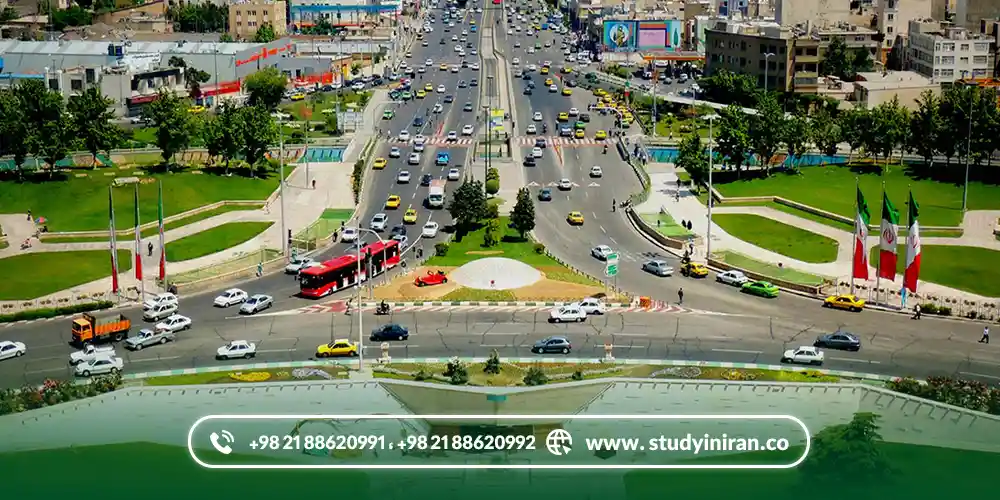
Tabriz is an essential city when discussing Iran’s largest urban centers, with the majority of its population speaking Azerbaijani. Covering an area of approximately 325 square kilometers, it ranks as the fourth-largest city by area and the fifth-most populous in Iran. Tabriz serves as the capital of East Azerbaijan Province, with most residents being Turkic-speaking.
The city’s origins are said to date back to the Achaemenid and Sassanid eras. Throughout history, Tabriz has played a central role under various rulers, including the Rawandids, Atabegs of Azerbaijan, Khwarazmshahs, Ilkhanids, Chupanids, Jalayirids, Qara Qoyunlu, Aq Qoyunlu, Safavids, local khanates, and during the Qajar dynasty. Many historical monuments from these periods still stand today.
Tabriz reached its peak during the Qajar era, becoming one of Iran’s most important and advanced cities. Today, it remains a key economic and industrial hub, having played a pivotal role in Iran’s social, cultural, and industrial developments over the past two centuries.
Shiraz, the City of Hafez and Saadi
Shiraz, covering an area of 240 square kilometers with a population of nearly 2 million, is one of Iran’s most beautiful and captivating cities and serves as the capital of Fars Province. It ranks as the fifth-largest and fifth-most populous city in the country and is renowned as a cultural and artistic center.
The city appears in ancient Elamite inscriptions under the names Tiraris or Tirarisiz, and historical records trace back to the Sassanid era. Shiraz served as Iran’s capital during various periods, including the Safavid, Buyid, and Zand dynasties, leaving behind numerous historical monuments from these eras.
Residents of Shiraz speak Persian with the Shirazi accent. The city is also the birthplace of many of Iran’s most celebrated poets and literary figures, including Hafez and Saadi. With its pleasant climate and charming natural surroundings, Shiraz remains one of Iran’s prime tourist destinations.
For students seeking admission in specialized arts programs and aiming to obtain an Iranian student visa, Shiraz offers an excellent environment for study and cultural immersion.
Karaj
Karaj is another major city in Iran, long considered a suburb of Tehran but now an independent county and the capital of Alborz Province. The city has grown significantly over the years, attracting many residents from Tehran. It spans more than 160 square kilometers and has a population exceeding 1.5 million. Due to its large immigrant population, Karaj is sometimes called “Little Iran” and is the country’s second-most popular destination for migrants after Tehran.
Karaj ranks as the fourth-most populous city in Iran and lies at the foothills of the Alborz Mountains. Its proximity to Tehran, industrial zones, and modern amenities make it an attractive choice for relocation. With a scenic mountainous climate and a diverse population from various ethnic groups, Karaj offers a vibrant and appealing living environment.
Qom
Qom is also among the largest cities in Iran. The majority of its residents are Shia Muslims, with small communities of religious minorities as well. The city is a major pilgrimage destination, anchored by the shrine of Hazrat Masoumeh and the Jamkaran Mosque, which give it significant religious importance.
Qom is often referred to by titles such as “Shrine of the Ahl al-Bayt,” “City of Knowledge,” “Resting Place of the Faithful,” “City of Monotheists,” and “City of the Generous Ahl al-Bayt.” The city has a long history, with a settlement dating back around ten thousand years. Historically, Qom was home to Zoroastrians and was known as “Mamjan.” Records indicate that it prospered during the Achaemenid and Sassanid eras. Today, Qom is also a city that attracts migrants, with diverse communities including Afghans, Pakistanis, and Arabs.
Kermanshah
Kermanshah is another major city in Iran, serving as the capital of Kermanshah Province and a key urban center in the central-western region of the country. The city enjoys a mild mountainous climate and is home to numerous historical sites spanning various periods.
Kermanshah’s history dates back to around 3500 BCE. During the Parthian era, it was a significant settlement, and in the Sassanid period, it served as a secondary capital. Today, Kermanshah is recognized as one of Iran’s most important historical and cultural cities, featuring famous landmarks such as Taq Bostan, making it a popular destination for tourists.
Ahvaz
Ahvaz is the final city on this list. It is the capital of Khuzestan Province and the largest and most populous city in southwestern Iran. The presence of factories, companies, and oil fields gives Ahvaz significant economic importance. The city is also known as one of the hottest cities in the world.
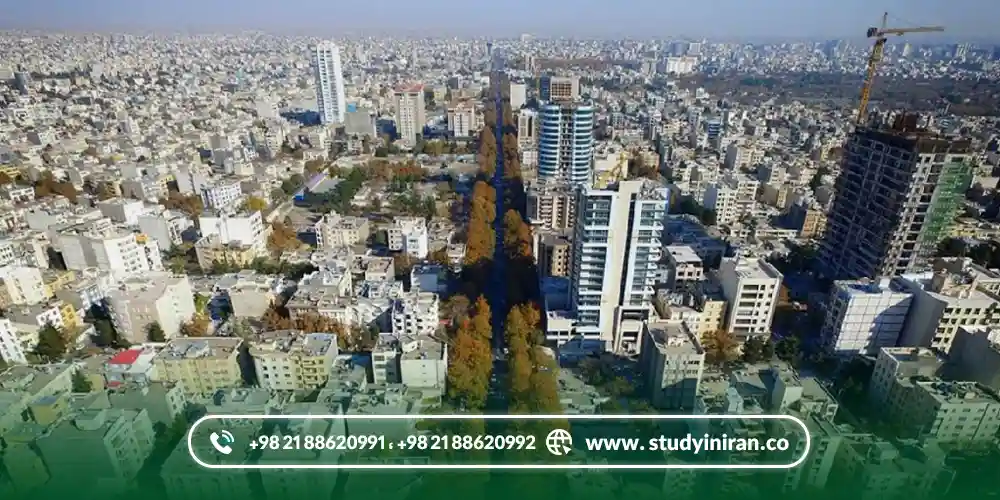
Major Cities in Iran
Some of Iran’s most important cities include Tehran (the capital and economic hub), Shiraz (a poetic city with historical sites like Persepolis), Isfahan (famous for its mosques and historic bridges), Karaj (a growing industrial and residential center), Kerman (known for its markets and desert landscapes), Mashhad (a major pilgrimage site with the Imam Reza shrine), Ahvaz (an industrial city with rivers and oil facilities), and Tabriz (renowned for carpets and historical landmarks). If you are admitted to universities in any of these cities, applying for an Iranian scholarship can help reduce costs.
Most Beautiful Cities in Iran
Isfahan, Shiraz, and Yazd are often considered the most beautiful cities in Iran. Isfahan, with its tiled mosques and bridges, is nicknamed “Half of the World.” Shiraz is celebrated for its gardens, poetry, and historical sites like Persepolis. Yazd, with its windcatchers and desert architecture, is a UNESCO World Heritage site. Travelers also admire Tabriz and Tehran for their vibrant bazaars and blend of tradition and modernity.
Coldest Cities in Iran
Some of the coldest cities in Iran include Hamedan, Ardabil, Borujen, and Fariman. Hamedan and Ardabil, located at high altitudes near mountains, experience long, snowy winters with subzero temperatures. Hamedan lies on the slopes of Mount Alvand, while Ardabil is near Mount Sabalan, famous for its severe winter cold and consistent snow cover. Borujen, in Chaharmahal and Bakhtiari, records over 130 days of frost annually, and Fariman in Khorasan Razavi also sees very low winter temperatures. These regions experience the longest and coldest winters in Iran due to altitude and continental climate effects.
Hottest Cities in Iran
The Khuzestan region and the Persian Gulf coast are the hottest areas in Iran. Cities like Ahvaz and Abadan can exceed 50°C (122°F) in summer, while Bandar Abbas is known for extreme heat and humidity. Central desert cities such as Yazd and parts of Kerman also experience very hot summers, though they are generally dry. Temperature extremes vary by season and region, but Ahvaz and Abadan consistently rank among the hottest urban areas in Iran.
Popular Tourist Destination in Iran
One of Iran’s most popular tourist destinations is Kish Island in the Persian Gulf. The island is known for its sandy beaches, coral reefs, and tax-free shopping, offering a different experience from the mainland cities. Kish allows short-term visa-free entry, making it one of the easiest places for tourists to visit. With its peaceful environment, modern hotels, and water sports activities, Kish has become a hub for both domestic and international tourism.
Final Thoughts
Understanding Major cities of Iran—from the bustling economic hub of Tehran to historic and cultural centers like Isfahan and Shiraz, and religious cities such as Mashhad and Qom—provides a comprehensive view of urban diversity, as well as educational and career opportunities in the country. Each city offers a unique experience in terms of culture, economy, education, and climate. For students and migrants, knowing these cities and choosing the right place to live and study is crucial.
Study in Iran offers accurate and up-to-date information on cities, universities, and facilities, serving as a reliable guide to make studying and living in Iran easier, more engaging, and successful.
Frequently Asked Questions
Tehran is the largest city, with over 8.6 million residents in the central urban area. It serves as Iran’s political, economic, and cultural center.
Major cities include Tehran (capital and economic hub), Mashhad (religious city with Imam Reza shrine), Isfahan (historic city with architectural and cultural landmarks), Shiraz (cultural and artistic center), Tabriz (historical and industrial city), Karaj (industrial and migrant-friendly city), Ahvaz (oil and industrial hub), and Yazd (historic desert city with windcatchers).
Isfahan, Shiraz, and Yazd are widely regarded as Iran’s most beautiful cities. Isfahan is famous for its turquoise-tiled mosques and bridges, Shiraz for its gardens, poetry, and historical sites, and Yazd for its windcatchers and historic desert architecture.
Hamedan, Ardabil, Borujen, and Fariman are the coldest cities, experiencing long winters with frequent snow and subzero temperatures.
Ahvaz and Abadan in Khuzestan, and Bandar Abbas in the south, are the hottest cities, with summer temperatures exceeding 50°C (122°F).
The most populous cities are Tehran, Mashhad, Isfahan, Karaj, and Shiraz.
Isfahan, Shiraz, Yazd, Tabriz, and Kashan are key historical and tourist destinations, boasting mosques, bridges, bazaars, gardens, and rich Persian architecture.
Tehran, Karaj, Tabriz, and Ahvaz are the main industrial and economic hubs, hosting the highest concentration of companies, factories, and job opportunities.
Yes, Mashhad and Qom are major religious and pilgrimage centers. Mashhad is famous for the Imam Reza shrine, and Qom for the shrine of Hazrat Masoumeh and religious educational institutions.
Cities like Isfahan, Shiraz, and Tabriz are considered more comfortable for living, thanks to favorable climate, urban infrastructure, cultural amenities, and overall quality of life.
0 Reply To “Major Cities of Iran”