


- Educational Structure of Mechanical Engineering in Iran
- Admission Requirements for Master’s in Mechanical Engineering in Iran
- Tuition Fees for Mechanical Engineering in Iran
- Top Universities for Mechanical Engineering in Iran
- Educational Skills of Mechanical Engineering Graduates in Iran
- Job Market for Mechanical Engineering in Iran
- Final Note
- Frequently Asked Questions
Pursuing a degree by studying mechanical engineering in Iran offers a unique opportunity for students interested in designing, analyzing, and building mechanical systems. As one of the oldest and most comprehensive engineering fields, it combines principles of physics, mathematics, materials science, and engineering to equip students with the skills to solve complex problems across various industries.
Mechanical engineering students gain knowledge in thermodynamics, mechanics, manufacturing processes, and design, preparing them for careers in automotive, aerospace, energy, robotics, production, and even biomedical engineering. Beyond technical expertise, the program develops students’ abilities to analyze systems, optimize performance, and solve practical challenges, contributing to technological advancement and improved quality of life. Leading Iranian universities provide extensive theoretical and practical training, creating an environment to nurture skilled mechanical engineers ready for the workforce.
Educational Structure of Mechanical Engineering in Iran
1. Definition and Objective:
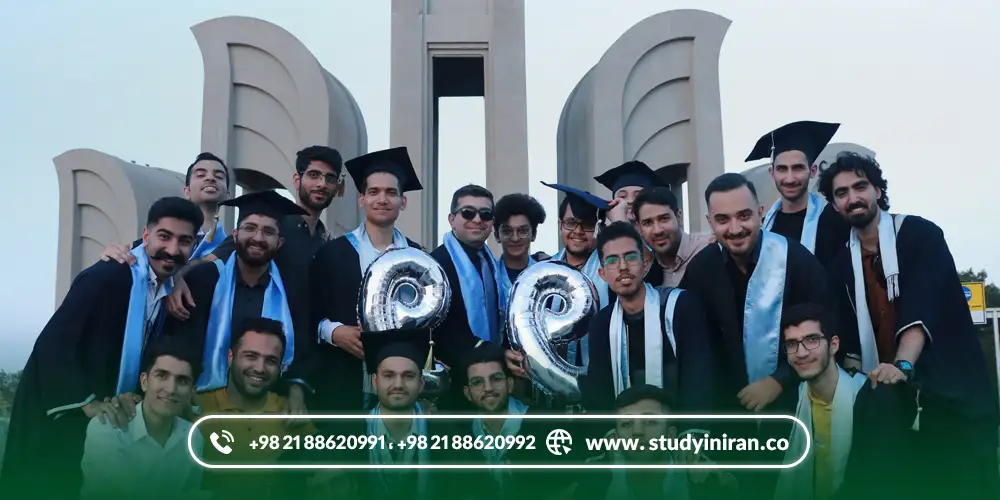
This program prepares students in Iran to design, calculate, and implement mechanical components and systems that operate through energy conversion and heat/mass transfer. Graduates are equipped to handle the design and analysis of mechanisms in fields such as agriculture, automotive, military industries, and industrial machinery. Applications include power plants, internal combustion engines, gas turbines, jet engines, heating, ventilation, air conditioning systems, and water systems.
2. Program and Curriculum:
The mechanical engineering degree typically spans four years, divided into eight semesters. Students are required to complete 142 credit units and 272 hours of practical work in workshops and affiliated factories. Each semester lasts 16 weeks, with one theoretical credit unit comprising 17 hours of instruction and one laboratory unit including 34 hours of practical training. Exams for each course generally last one hour.
3. Courses:
The 142 credit units are distributed as follows:
- General courses: 22 units
- Basic science courses: 25 units
- Core mechanical engineering courses: 61 units
- Technical specialized courses: 28 units
- Final project and workshops: 6 units
4. Roles and Competencies:
Graduates can design and calculate components and systems for diverse industries, including power production, steam and hydroelectric plants, automotive and combustion engines, HVAC systems, oil and gas, metal smelting, food industries, and other manufacturing sectors. They are also capable of designing mechanisms for heavy machinery in agriculture, road construction, military applications, textile, and automotive production.
5. Necessity and Importance:
Offering this program aligns with Article Four of the Iranian Constitution, ensuring the training of specialized personnel for critical national industries.
6. Undergraduate Credit Units:
Students select the required units from a structured curriculum outlined in tables 1 to 6, covering general, foundational, core, and specialized courses, as well as workshops and projects.
Admission Requirements for Master’s in Mechanical Engineering in Iran
Program Duration:
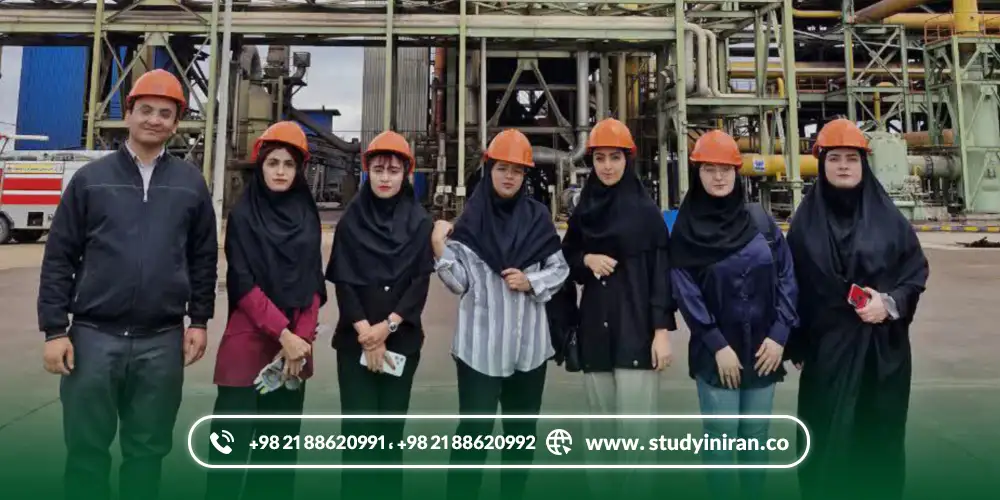
The master’s program in Mechanical Engineering typically lasts between two to four years, spanning 4 to 8 semesters. It combines theoretical courses, practical workshops, and research projects to prepare students for designing and analyzing mechanical systems across various industries.
Language of Instruction:
The primary language of instruction is Persian. Some universities offer short-term Persian language courses for international students to help them adapt to the academic environment and classroom settings.
Academic Requirements:
Applicants must hold a bachelor’s degree in Mechanical Engineering or a related field with a suitable GPA, usually a minimum of 3.2 out of 4 (or equivalent). Graduates from reputable universities with excellent academic records have higher chances of admission.
Scholarships:
Tuition fees for undergraduate and master’s programs in Iran vary, averaging between 2,000 to 3,000 euros per semester. Many universities provide scholarships to support students and reduce study costs. These scholarships may cover partial or full tuition and are generally awarded based on academic performance and achievements.
Required Documents:
- Valid passport
- Biometric photo
- Academic CV
- Statement of Purpose (SOP)
- Financial documents or scholarship letters
- Bachelor’s degree and transcripts
- Proof of language proficiency (Persian or English)
- Letters of recommendation (if required)
Exams and Admission Scores:
For domestic applicants, admission is usually based on the national entrance exam or university-specific tests. For international students, the primary criteria are undergraduate GPA and academic background, though some universities may require a language test or specialized interview.
Application and Admission Process:
Applicants must complete the university’s online application form and upload the required documents. After evaluating academic records and supporting materials, the admission decision is announced. Accepted candidates can then proceed to apply for a student visa.
Tuition Fees for Mechanical Engineering in Iran
The cost of studying Mechanical Engineering in Iran for international students starts at approximately $898 per year. Tuition fees vary depending on the university and the language of instruction.
Top Universities for Mechanical Engineering in Iran
University of Tabriz
One of Iran’s oldest and most prestigious universities, University of Tabriz aims to excel in higher education and research. Ranked among the top five universities in the country, it is the second-oldest university after the University of Tehran. Its campus is one of the largest in northwestern Iran and is a member of the Caucasus University Association. Domestic student admission is through the national entrance exam, while international students follow specific regulations.
Sharif University of Technology
Located in Tehran, Sharif University of Technology is a public research university specializing in STEM fields (science, technology, engineering, and mathematics). Founded in 1966, it hosts 15 main faculties with over 6,000 undergraduate and 4,700 graduate students. Domestic admission is limited to top-ranking students in the national exam, and the university holds a significant global reputation.
University of Tehran – Kish International Campus
Situated on Kish Island, this international campus offers all courses in English. It provides programs across engineering, law, management, and economics, along with opportunities for international conferences and research collaborations.
Iran University of Science and Technology
This research-focused engineering university in Tehran comprises 15 faculties and multiple research centers. It is the only university in the Middle East with a Railway Engineering Faculty and the only one in Iran with an Automotive Engineering Faculty. Extensive facilities and specialized laboratories make it a leading center for practical education and industrial research.
Amirkabir University of Technology
Known as Tehran Polytechnic, Amirkabir University is Iran’s oldest technical university and often called the “mother of engineering universities.” Admission requires top ranks in the national entrance exam. The university has 18 science and engineering faculties, multiple research groups, and extensive international collaborations, and it is a pioneer in sustainable engineering education.
Educational Skills of Mechanical Engineering Graduates in Iran
Graduates of mechanical engineering in Iran acquire the ability to design and prepare construction and renovation projects of moderate to high complexity. Their skills cover designing mechanical systems such as HVAC (heating, ventilation, and air conditioning), hot and cold water piping, steam systems, energy recovery systems, laboratory piping, and wastewater and potable water systems. They can produce technical design specifications, including maintenance and modifications, ensuring compliance with engineering standards and relevant regulations.
They are capable of providing technical support to operational teams responsible for repair, maintenance, replacement, and installation of HVAC and piping systems, as well as identifying and resolving infrastructure issues in facilities or coordinating with external resources when necessary.
Graduates can review internal and external design documents to ensure alignment with university or organizational standards and assess the impact of new designs on existing systems. They are prepared to lead interdisciplinary project teams, manage timely project completion, and represent their department in various meetings.
Practically, they contribute to developing written university standards to ensure compliance with federal, state, and local regulations, and they oversee and review the work of subordinate personnel. Core skills include analyzing and designing HVAC and piping systems, preparing construction drawings and specifications, coordinating with project managers and operational teams, and providing specialized technical support.
Job Market for Mechanical Engineering in Iran
Mechanical engineering graduates in Iran, equipped with technical knowledge and practical skills, can work across a variety of industries. Key career areas include designing and maintaining mechanical systems, analyzing and designing industrial equipment, machinery repair and maintenance, and managing engineering projects. Significant opportunities exist in the automotive, aerospace, oil and gas, energy, manufacturing, and construction sectors.
Proficiency in software such as AutoCAD for technical drawings, and familiarity with 3D design tools like REVIT, are essential. Other critical skills include Microsoft Office proficiency, effective communication, technical writing, and project management and coordination.
Graduates are expected to solve complex problems, prioritize multiple tasks, negotiate solutions, and manage changes in the workplace. These capabilities enable them to contribute to construction and maintenance projects involving HVAC systems, piping, steam systems, hot and cold water systems, and natural gas networks, playing a key role in energy optimization and industrial or building facility management.
Given the diversity of industries and the continuous demand for skilled professionals, the mechanical engineering job market in Iran offers varied opportunities alongside technical challenges, requiring a combination of theoretical knowledge, hands-on experience, and managerial abilities.
Final Note
Studying Mechanical Engineering in Iran offers a unique opportunity for students interested in applied sciences and engineering. Prestigious Iranian universities, with comprehensive academic programs, well-equipped workshops and laboratories, and experienced faculty, prepare students for entry into industrial and research careers. International students can also benefit from special facilities, language courses, and scholarship opportunities. For complete guidance and professional support on studying Mechanical Engineering in Iran, the Study In Iran institute is the best resource for accurate information and assistance.
Frequently Asked Questions
The undergraduate program in Mechanical Engineering typically lasts four years, divided into eight semesters. Students are required to complete around 142 credit units and participate in workshops and industrial internships.
The primary language of instruction at public universities is Persian, but some universities and international campuses offer courses in English. Short-term Persian language programs are also available for international students.
For admission to public universities, domestic students must take the national entrance exam (Konkur) and achieve the required rank. International students are generally evaluated based on high school grades and previous academic records.
For domestic students, tuition is usually free or very low. International students can expect to pay from approximately $898 per year, and some universities offer scholarships or discounts.
Graduates gain the ability to design and analyze components and systems across various industries, including power plants, automotive, defense, thermal and cooling systems, and industrial production. They can work in fields such as automotive engineering, energy, metallurgy, and heavy machinery.



0 Reply To “Studying Mechanical Engineering in Iran”